Leave Your Message

2026 Best Food Vacuum Bags for Bulk Buying?

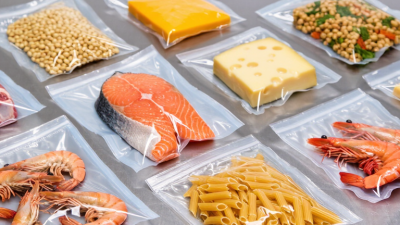
Buying food in bulk can lower grocery costs and reduce repeat trips. Yet those savings disappear when bags leak, seals wrinkle, or freezer odors reach stored food. Small details matter. A bag that fits your sealer, lies flat, and closes evenly can make portioning easier. A poor fit can waste both food and time.

This guide to the 2026 best food vacuum bags for bulk buying focuses on practical factors: sealer compatibility, material thickness, roll or precut format, and cost per usable bag. Searches for “Vacuum Bags Food” can lead to many similar-looking products, but packaging claims do not tell the whole story. Check the manufacturer’s guidance for your sealer, and look for clear instructions on freezer, refrigerator, or sous vide use. Not every bag suits every task.

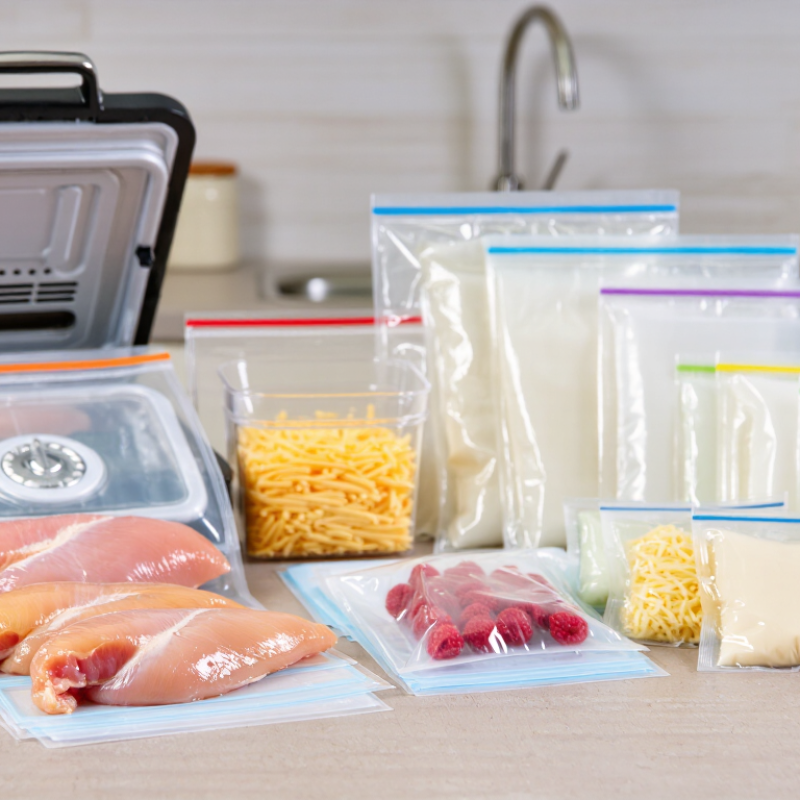
Bulk buyers also need sizes that match real portions. A wide roll may suit large cuts, while smaller precut bags can help with berries, grated cheese, or single-meal servings. Keep the sealing area clean and dry; crumbs or moisture can interfere with a reliable closure. Reviews may reveal recurring fit or seal issues, but individual results can vary by machine and technique. There is no universal winner. Even a well-reviewed bag may disappoint if it does not match your sealer or storage routine. The recommendations ahead aim to make that trade-off easier to judge before you buy a large pack.
2026 Best Food Vacuum Bags for Bulk Buying?

Define Bulk-Buying Needs by Bag Size, Roll Length, and Storage Volume

Buying vacuum bags in bulk works best when package sizes match real kitchen habits. List the foods you portion most often: chicken thighs, soup servings, chopped vegetables, or coffee beans. Measure the widest item, then leave extra material for a clean seal. A bag that barely fits can wrinkle near the sealing edge. That ruins the plan.

Choose widths for common portions, not every imaginable task. Small bags reduce excess material around single servings; wider bags suit roasts or several portions. For irregular cuts, rolls let you choose the length, but each cut needs a straight edge and room for sealing. Keep two or three useful sizes. More options can become clutter.

Estimate roll length from weekly use, then consider where the supply will live. If you seal ten portions weekly and each needs 25 centimeters, a five-meter roll lasts roughly two weeks, before trimming or mistakes. Add a modest buffer, not a year’s supply. Check drawer dimensions too; bulky multipacks can crowd a small pantry. Store rolls flat, away from heat, and label their widths. I still find that household estimates drift. Track a month of use, then adjust your next purchase.
Compare Barrier Performance with ASTM D3985 Oxygen-Transmission Testing

2026 Best Food Vacuum Bags for Bulk Buying?

For bulk buying in 2026, a bag’s thickness alone cannot show how well it blocks oxygen. Ask for oxygen-transmission-rate (OTR) data measured using ASTM D3985, a coulometric method for testing plastic films. Results are commonly reported in cubic centimeters per square meter per day under stated test conditions. Lower OTR generally means less oxygen passes through the material. Conditions matter. But oxygen is not the only quality risk.

Compare candidate bags only when temperature, humidity, film thickness, and conditioning are similar. A supplier’s datasheet may test flat film, not a finished bag with seams, folds, or punctures. Request the lab report, test date, sample construction, and exact OTR units. Then test filled bags through your normal packing and storage routine; seal quality and handling can change real-world performance. This step is easy to skip.

Tips: Match the barrier to the food, storage duration, and temperature. Keep a sample from each lot, and inspect seals after packing. Ask whether results represent the same multilayer structure and thickness you plan to buy. A low OTR number looks reassuring, yet it cannot predict every failure. One weak seal can undo a good film.

2026 Best Food Vacuum Bags for Bulk Buying? — Compare Barrier Performance with ASTM D3985 Oxygen-Transmission Testing
Bag construction (unbranded) Oxygen-barrier expectation ASTM D3985 comparison data to request Moisture and handling considerations Bulk-buying fit Best suited for
Polyamide / polyethylene (PA/PE)
Common transparent coextruded vacuum-pouch structure.
Moderate to good. Generally offers a better oxygen barrier than a polyethylene-only film; actual performance varies with layer design and total thickness. Compare measured OTR in cm³/(m²·day), test temperature, relative humidity, specimen thickness, and whether results apply to film or finished pouches. Flexible and commonly used for vacuum packing. Polyamide barrier performance can be affected by moisture; assess puncture resistance for sharp or bone-in foods. A practical general-purpose option when the supplier can provide consistent, lot-specific specifications and a suitable food-contact declaration. Routine frozen or refrigerated portions, meats, and other foods where a moderate-to-good barrier is adequate.
Polyamide / EVOH / polyethylene
Multilayer coextrusion with an EVOH barrier layer.
Very high under appropriately controlled conditions. EVOH is an effective oxygen-barrier resin, but its performance is sensitive to humidity and the protective outer layers. Request ASTM D3985 OTR results at stated humidity conditions. Compare like-for-like structures and thicknesses; a dry-condition film result alone may not represent use in a humid environment. Flexible and transparent. Moisture protection from the surrounding layers is important; verify performance after conditioning relevant to the intended storage environment. Suitable when longer storage or oxygen-sensitive foods justify the added material complexity; confirm the tested structure matches the supplied bag. Longer-storage frozen foods, oxygen-sensitive ingredients, and products for which appearance and transparency matter.
Metallized polymer laminate
Polymer film carrying a thin deposited metal layer, typically paired with a sealant layer.
High when the metallized layer is continuous and undamaged. Barrier can be reduced by pinholes, flexing, abrasion, or converting damage. Ask for the finished laminate’s measured OTR and test conditions. For bulk procurement, request repeatability or quality-control data, not just a nominal film value. Usually opaque or reflective. Check flex-crack resistance, seal integrity, and whether the structure is suitable for the intended vacuum-packaging equipment. Consider for products needing a stronger light and oxygen barrier, provided the supplier documents performance after processing and handling. Light- and oxygen-sensitive dry foods or selected vacuum-packed foods where an opaque package is acceptable.
Aluminum-foil laminate
Polymer layers laminated around a continuous foil barrier.
Very high when the foil is intact. Finished-package performance can be limited by seals, folds, pinholes, or mechanical damage. Request OTR data for the finished construction and confirm the laboratory method’s reporting limit. Also evaluate seal integrity, since a low film OTR does not establish a leak-free package. Opaque and highly protective, but less tolerant of sharp folds or punctures than many all-polymer structures. Confirm suitability for vacuum use and handling. Best reserved for applications where a very strong barrier is necessary and the added laminate complexity is justified. Highly oxygen- or light-sensitive products requiring an opaque, high-barrier package.
Polyethylene-only film (PE)
Single-material or predominantly polyethylene construction.
Low oxygen-barrier performance compared with PA/PE, EVOH-containing, metallized, or foil laminates. Use the same ASTM D3985 reporting fields: OTR, temperature, relative humidity, thickness, and specimen type. Compare results only under matched conditions. Good moisture-barrier performance is possible, depending on grade and thickness; oxygen protection is comparatively limited. May suit short-duration or less oxygen-sensitive uses when recyclability or simple material construction is a priority and the application has been validated. Short-term storage or foods for which oxygen exposure is not a critical quality concern.
How to read the comparison: ASTM D3985 is a test method for measuring oxygen-gas transmission through plastic film and sheeting using a coulometric sensor. It does not assign a universal OTR value to a material type. Results depend on the specific construction, thickness, conditioning, temperature, relative humidity, and laboratory procedure. The qualitative barrier descriptions above are material-structure guidance—not product-specific test results or guaranteed performance.
Bulk-purchase checklist: Obtain a current ASTM D3985 report for the exact construction and gauge being purchased; check test conditions and units; confirm food-contact suitability for the intended market and food; request seal and puncture-performance specifications; and evaluate representative bags on the actual vacuum sealer before ordering a large quantity. ASTM D3985 film data alone do not establish the oxygen ingress or leak rate of a finished pouch.

Check Seal Strength Against ASTM F88 Packaging-Test Methods

For bulk purchases, a strong-looking seam is not proof of a reliable seal. ASTM F88/F88M describes a method for measuring the force needed to separate a flexible package seal. A tester grips a cut strip and pulls it at a controlled rate. Results depend on specimen width, setup, and test conditions, so comparisons are meaningful only when those details match. Ask for the test method and sample count, not just a single strength figure. One impressive strip can flatter a whole production lot.

Request results from several bags, ideally from more than one lot. Note whether the seal stretched, peeled apart, or tore through the material; these failure patterns help explain the number. That matters. A buyer can also check seals after ordinary handling and storage, since a lab pull does not reproduce every shipping condition. ASTM F88 measures seal strength, not package leak resistance or food safety. There is no universal “good” result for every bag: suitable limits depend on the bag structure, sealing process, and intended use. I would not treat a high average as enough if the results vary widely. A few imperfect samples deserve a closer look.

Match Bags to Safe Storage: USDA Advises Freezers at 0°F (−18°C)

Bulk buying only works when food stays safely cold. USDA advises keeping the freezer at 0°F (−18°C) or below. Check the appliance with a separate freezer thermometer; the built-in dial may not show the actual temperature. Vacuum bags can limit air exposure, but they do not make food safe at room temperature or stop every quality change. Keep perishable foods chilled while portioning, and freeze them promptly. Small batches are easier to handle.

Choose bags labeled for freezer use, then portion meat, vegetables, or leftovers into amounts your household can use at once. Leave enough room for food to lie flat, and keep the sealing edge clean and dry. For soups or marinades, freeze the food in a container first, then transfer the solid portion to a bag.

Less mess.

Press out air without crushing delicate foods, seal carefully, and check for gaps. I have found that a tiny fold near the seal can cause trouble later; it is easy to miss. Label each bag with its contents and date, and rotate older portions forward.

If the freezer warms above 0°F, assess how long food was exposed and whether it still contains ice crystals; when in doubt, consult trusted food-safety guidance rather than relying on the bag alone.

Rank Bulk Packs by Cost per Bag, Food Compatibility, and Seal Reliability

For 2026 bulk buying, rank vacuum bags by usable cost, not package price alone. Divide the total price by the number of bags in the sizes you will actually use. A huge pack can be poor value if most bags are too wide for everyday portions. Check material thickness and stated freezer or cooking-temperature limits. Food-safe does not automatically mean suitable for every method. Smooth bags generally require a chamber sealer; textured bags are commonly designed for external suction sealers. Verify your machine’s instructions before ordering.

Seal reliability matters most with moist foods and long freezer storage. Look for consistent texture, clear sealing guidance, and reviews that describe repeated use rather than a single successful seal. Keep the bag opening dry and flat. For juicy cuts, leave extra space above the food and consider a second seal. It is a small hassle. I would still test a few bags before committing to a case; package descriptions can leave important details out.

Tips: Compare the cost per bag in your preferred size, then buy a small quantity first. Label filled bags with contents and date, and inspect each seal before freezing. If a bag wrinkles across the sealing area, redo it rather than trusting the first pass.