How to Choose Chamber Vacuum Bags for Global Sourcing?
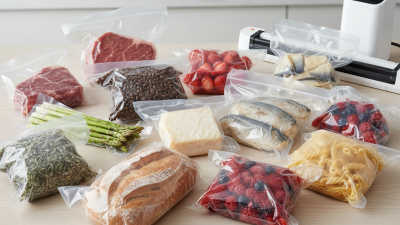
Global sourcing of vacuum packaging is no longer a simple price comparison. Chamber Vacuum Bags must protect products, survive transport, and meet destination-market requirements. A low unit price can become expensive after leakage, rejected shipments, or damaged seals.
The need is substantial. UNEP’s Food Waste Index Report 2024 estimated that 1.05 billion tonnes of food were wasted in 2022 across households, food services, and retail. Better packaging cannot solve food waste alone. However, reliable barrier performance can help reduce oxygen exposure, moisture migration, and handling damage. The report also reminds buyers that packaging decisions should support broader waste-reduction goals.
Material selection requires practical evidence. Buyers should compare film structure, thickness, seal strength, puncture resistance, oxygen transmission, and temperature performance. ASTM F88/F88M supports seal-strength testing, while ASTM D3985 measures oxygen transmission through plastic films. These tests make supplier claims more measurable. They do not replace product-specific trials.
Regulatory review matters too. Food-contact materials may require compliance with U.S. FDA rules or European Framework Regulation (EC) No. 1935/2004. Suppliers should provide current declarations, migration information, batch traceability, and clear production records. Ask for samples.
Then test real products.
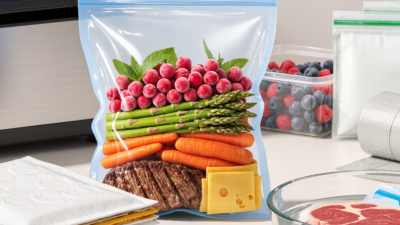
Place sharp bones, oily foods, or irregular portions inside the bags. Run the intended chamber cycle, stacking, refrigeration, and transport simulation. A specification can look complete and still fail at the seal. This is where sourcing experience matters. Not every reported value reflects your product, machine, or climate. A careful comparison of Chamber Vacuum Bags should balance verified performance, supplier reliability, compliance evidence, and total landed cost.
Classify Chamber Bags by PA/PE Structure, Thickness, and Seal Type
How to Choose Chamber Vacuum Bags for Global Sourcing?
Chamber vacuum bags are commonly built with PA/PE layers.
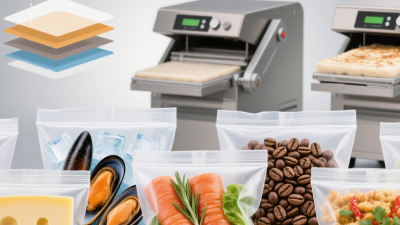
PA supports puncture resistance and protects against oxygen transfer. PE provides flexibility and reliable heat sealing. For products with bones, shells, or rough edges, a stronger PA layer can reduce failures. Soft foods may need less reinforcement. This is where over-specifying can waste money.
Thickness is usually measured in microns.
Thin bags suit smooth, lightweight products. Thicker bags handle frozen items, liquids, and sharp surfaces better. However, thicker does not always mean safer. I have seen poorly sealed thick bags fail before thinner, well-made bags. Ask suppliers for thickness tolerance, layer ratios, and test results. Check samples with your real products, not empty bags.
Seal type also deserves close attention.
A single seal may work for dry goods with gentle handling. Double seals add security for liquids, long storage, or rough transport. Wider seals can improve reliability, but they also reduce usable packing space. Check seal width, seal strength, and compatibility with your chamber machine. A practical test includes vacuuming, cooling, stacking, and dropping filled bags. Small wrinkles near the seal can become leaks later. Sourcing decisions should reflect the entire shipping journey, not only the factory sample.
Specify OTR and WVTR Targets Using ASTM D3985 and ASTM F1249
How to Choose Chamber Vacuum Bags for Global Sourcing?
Specify OTR and WVTR Targets Using ASTM D3985 and ASTM F1249
Vacuum appearance does not prove barrier performance. Specify oxygen transmission rate (OTR) under ASTM D3985 and water vapor transmission rate (WVTR) under ASTM F1249. OTR is reported in cc/m²/day, while WVTR uses g/m²/day. A lower number means stronger protection.
Set targets from the product, shelf life, and shipping climate. For oxygen-sensitive dried foods, a preliminary specification might require OTR below 0.1 cc/m²/day. WVTR below 0.1 g/m²/day may suit moisture-sensitive products. These are starting points, not universal answers. ASTM D3985 commonly uses controlled oxygen exposure, while ASTM F1249 evaluates vapor transmission with defined temperature and humidity. Record every test condition.
This detail matters during global sourcing. A bag tested at 23°C may perform differently inside a hot container. Film thickness, seal quality, and punctures also change real results. The United Nations Environment Programme reported 1.05 billion tonnes of food waste in 2022, showing why shelf-life protection deserves careful engineering. Smithers valued the global flexible packaging market at about $201 billion in 2023, reflecting the scale of material choices. I would not accept a supplier’s “high barrier” claim without an independent report. Request machine direction, cross direction, conditioning time, and test laboratory details. My own weak point is assuming laboratory results predict every warehouse; they do not.
How to Choose Chamber Vacuum Bags for Global Sourcing? - Specify OTR and WVTR Targets Using ASTM D3985 and ASTM F1249
| Bag Structure |
Typical Total Thickness |
Recommended Product Category |
OTR Target
(cc/m²·day) |
WVTR Target
(g/m²·day) |
ASTM D3985 OTR Test Condition |
ASTM F1249 WVTR Test Condition |
Sourcing Guidance |
| LDPE / LLDPE |
70–120 µm |
Dry goods, non-oxygen-sensitive parts, short-term storage |
≤ 1,500 |
≤ 8.0 |
23°C, 0% RH, dry oxygen |
38°C, 90% RH |
Use when moisture and oxygen barrier requirements are low. Confirm puncture resistance and seal strength. |
| PA / PE |
80–150 µm |
Meat, seafood, sharp-edged components, products requiring toughness |
≤ 100 |
≤ 6.0 |
23°C, 0% RH, dry oxygen |
38°C, 90% RH |
Provides good mechanical strength, but polyamide oxygen performance can deteriorate as humidity increases. |
| PET / PE |
80–140 µm |
General-purpose vacuum packaging and abrasion-resistant applications |
≤ 150 |
≤ 4.0 |
23°C, 0% RH, dry oxygen |
38°C, 90% RH |
Select when dimensional stability and printability are important, but extreme barrier performance is not required. |
| EVOH Multilayer / PE |
90–160 µm |
Oxygen-sensitive foods, medical components, long-distance distribution |
≤ 1.0 |
≤ 3.0 |
23°C, 0% RH, dry oxygen |
38°C, 90% RH |
Specify humidity during OTR testing because EVOH barrier performance is humidity-sensitive. Protect the barrier layer from flex cracking. |
| Metallized PET / PE |
80–130 µm |
Coffee, snacks, powders, light-sensitive products |
≤ 1.0 |
≤ 0.5 |
23°C, 0% RH, dry oxygen |
38°C, 90% RH |
Verify metal coverage, flex durability, pinholes, and seal integrity. Barrier values vary significantly with coating quality. |
| Aluminum Foil Laminate / PE |
100–180 µm |
Highly oxygen-sensitive, moisture-sensitive, light-sensitive products |
≤ 0.05 |
≤ 0.05 |
23°C, 0% RH, dry oxygen |
38°C, 90% RH |
Best suited to demanding barrier applications. Require pinhole inspection, fold testing, and careful handling during filling. |
Specification note: OTR and WVTR values above are practical sourcing targets for preliminary material selection, not universal performance limits. ASTM D3985 defines a coulometric method for oxygen transmission rate, while ASTM F1249 defines a modulated infrared sensor method for water vapor transmission rate. Final acceptance limits should be agreed with the converter or bag supplier using the same temperature, relative humidity, specimen orientation, conditioning time, thickness, and reporting units.
Global sourcing checklist: Request independent test reports, confirm the measurement area and film thickness, define maximum rather than average values, test finished bags when possible, and separately verify seal strength, leak rate, puncture resistance, coefficient of friction, and vacuum-retention performance.
Verify FDA 21 CFR and EU 10/2011 Food-Contact Compliance by Market
Choosing chamber vacuum bags for global sourcing requires more than comparing thickness or price. The correct bag must match the food, sealing temperature, storage conditions, and destination market. For the United States, ask for evidence supporting FDA 21 CFR food-contact requirements. For the European Union, request compliance documentation under EU 10/2011. These are not interchangeable claims. Check the material structure, additives, intended use, and test conditions listed in each declaration. A bag for frozen meat may need different evidence from one used with hot soup. Small details matter.
Request a current Declaration of Compliance, migration test reports, and batch traceability records. The documents should identify the resin layers, inks, adhesives, and testing laboratory. Confirm that the report matches the actual bag, not only a similar film. Review overall migration and, where relevant, specific migration results. Test temperatures and contact times should reflect real packaging conditions. An accredited laboratory adds confidence, but paperwork still needs careful reading. A missing revision date is a warning.
Tips: Build a market-by-market checklist before requesting quotations. Record food type, contact temperature, storage duration, bag dimensions, seal strength, and required documents. Ask for production samples and inspect seals after vacuuming. Keep retained samples for future comparison. A practical review can still miss a formulation change. Recheck compliance after material, ink, or adhesive changes. This step feels slow, yet it protects sourcing decisions and customer trust.
Compare MOQ, Incoterms, Lead Times, and AQL 2.5 Quality Limits
Selecting chamber vacuum bags for global sourcing starts with the purchase order, not the lowest quote. State bag dimensions, film structure, thickness, seal width, and intended food-contact requirements. Then compare MOQ against actual monthly consumption. A low MOQ may increase unit cost, but excess bags tie up cash and age in storage. Ask for a pilot lot before committing. This step is often skipped.
Incoterms can change the apparent price sharply. Under FOB, the buyer manages main ocean freight and insurance. Under DDP, the seller carries wider delivery responsibility, but customs assumptions need careful checking. UNCTAD’s Review of Maritime Transport reports that ships carry over 80% of global merchandise trade by volume. Delays at ports can therefore affect even simple bag orders. The WTO reported a 1.2% decline in world merchandise trade volume in 2023, making suppliers more cautious with production slots. Confirm lead times for film making, printing, sealing, inspection, and dispatch separately. I still add a small buffer. It feels inefficient, but missed promotions cost more.
For quality, specify AQL 2.5 under ISO 2859-1, including lot size, inspection level, and acceptance numbers. AQL 2.5 is not permission for 2.5% of every shipment to fail. It describes a sampling system. Define critical defects separately, usually with zero acceptance, and list major defects such as weak seals, pinholes, or incorrect dimensions. Request inspection records, seal-strength tests, and random samples from multiple cartons. One weakness remains: sampling can miss rare failures, so retain reference samples and review complaints by production lot.
How to Choose Chamber Vacuum Bags for Global Sourcing?
Compare MOQ, Incoterms, lead times, and AQL 2.5 quality limits using practical order-profile benchmarks.
FOB usually provides the lowest landed-cost control but requires the buyer to manage main freight and import clearance. CIF includes ocean freight and insurance to the destination port, while DDP places most transport and import responsibilities on the seller. Lead times shown combine production and standard export handling and should be confirmed before ordering.
AQL 2.5 is an acceptance sampling limit, not a guaranteed defect percentage. Under ANSI/ASQ Z1.4, General Inspection Level II, normal inspection, the examples use lot-size bands of 1,201–3,200 units, 3,201–10,000 units, and 10,001–35,000 units. The sample sizes are 125, 200, and 315 units; Ac/Re values are 7/8, 10/11, and 14/15 respectively.