Leave Your Message

China Top 10 Chamber Vacuum Bags Manufacturers?

China’s vacuum packaging industry has become a major sourcing base for food processors, retailers, and industrial suppliers. Within this market, Chamber Vacuum Bags support longer shelf life, cleaner handling, and more efficient commercial sealing. Their performance depends on film structure, seal strength, oxygen barrier, puncture resistance, and dimensional consistency.

Industry data explains the growing interest. Grand View Research reports that the global vacuum packaging market is expanding steadily, supported by processed food, meat, seafood, and ready-to-eat products. Smithers also identifies flexible barrier packaging as an important area for food preservation and waste reduction. These reports do not rank individual Chinese suppliers, but they clarify the demand behind this manufacturer comparison. The numbers are useful, though market definitions can differ.

This guide examines China’s top 10 Chamber Vacuum Bags manufacturers through practical purchasing criteria. These include production capacity, material options, thickness control, printing capability, factory certifications, testing procedures, export experience, and response speed. Particular attention should be given to food-contact compliance, including applicable FDA, EU, and GB standards. A polished website is not enough. Real evidence matters.

Ask for samples. Check the seal line. Test the bag with sharp-edged products, liquid contents, and repeated vacuum cycles. Some suppliers may offer attractive prices but inconsistent batches. Others may provide excellent films with limited customization. A ranking is never perfectly neutral, because buyer requirements vary. Still, this overview aims to provide a clearer, evidence-based starting point for importers and packaging professionals comparing reliable Chinese manufacturers.
China Top 10 Chamber Vacuum Bags Manufacturers?

What Are Chamber Vacuum Bags and How Do They Work?

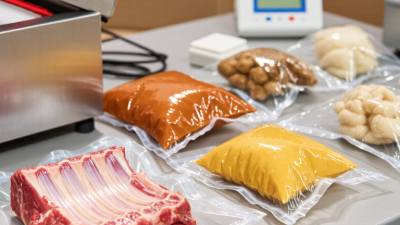
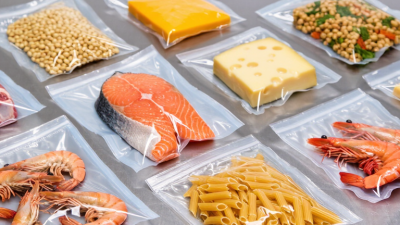
Chamber vacuum bags are multilayer plastic pouches designed for chamber vacuum packaging machines. Unlike external suction bags, they sit completely inside the machine. The chamber removes air from both the pouch and its surrounding space. Equal pressure then allows the bag to collapse evenly before heat sealing. This process helps protect meat, cheese, vegetables, and dry goods from oxygen, moisture, and freezer burn. Liquids are also easier to package because the machine does not pull them through a narrow nozzle.

When comparing China’s top 10 chamber vacuum bag manufacturers, buyers should examine more than price. Reliable suppliers should provide material specifications, seal-strength data, oxygen transmission results, and batch traceability. Bag thickness, textured surfaces, puncture resistance, and temperature performance deserve practical testing. A sample may look excellent but fail after repeated freezing or sharp food edges. I have found that small differences in seal width can affect storage reliability. That detail is easy to overlook.

Tips: Match the bag size closely to the product. Leave enough space for a clean seal. Test wet, oily, and frozen items separately. Ask for food-contact documentation and production samples before placing large orders. Do not judge quality by appearance alone. A simple pressure and leak test can reveal weak seals quickly.
Why Choose Chinese Chamber Vacuum Bag Manufacturers?

When comparing China’s top chamber vacuum bag manufacturers, buyers often notice competitive pricing first. The stronger reason is manufacturing depth. Many suppliers operate near film, printing, and packaging equipment clusters. This can shorten production cycles and simplify material coordination. It also supports faster adjustments for custom sizes, thicknesses, and sealing requirements.

Professional manufacturers usually document film structures, production batches, and seal-strength tests. Ask for migration data when the bags will contact food. Request puncture, leakage, and heat-seal testing for demanding applications. A reliable supplier should explain whether the bag uses PA/PE, recyclable layers, or another approved structure. Clear technical answers matter more than polished brochures. Details matter.

Chinese factories can also offer practical customization. They may produce bags with smooth surfaces, embossed channels, colored prints, or reinforced corners. Samples should be tested in the buyer’s own chamber machine. A bag that performs well in a laboratory may wrinkle during a busy production shift. That small difference can affect air removal and sealing consistency.

No supplier is perfect. A low quotation may hide thin film or weak quality control. I would review factory records, inspect packaging, and confirm corrective-action procedures. Video audits help, but an independent inspection is more convincing. Communication remains a risk, especially when technical terms are translated poorly. Written specifications, retained samples, and agreed tolerances reduce that risk. Reliability is built through repeatable evidence, not promises.

China Top 10 Chamber Vacuum Bags Manufacturers? - Why Choose Chinese Chamber Vacuum Bag Manufacturers?
No. Anonymous Manufacturer Profile Typical Material Construction Common Thickness Typical Size Capability Key Product Performance Common Compliance Options Main Manufacturing Strength Best-Fit Purchasing Requirement
1 High-Volume Flexible Packaging Supplier Co-extruded PA/PE, usually 7 to 9 layers 70–150 microns Standard and custom sizes up to approximately 600 × 1,000 mm Good puncture resistance, reliable heat sealing, suitable for chilled and frozen food Food-contact documentation, HACCP or ISO 22000 systems may be available Large production capacity and stable repeat orders Food processors and importers requiring competitive unit costs
2 Custom-Printed Chamber Bag Supplier PA/PE or PE/PA barrier film with reverse gravure printing 80–180 microns Custom width, length, gusset and printing layout Clear product visibility, strong seal integrity and customized appearance Food-contact declarations and ink compliance documents should be requested Artwork adaptation, color consistency and private-label packaging Retail-ready meat, seafood and prepared-food packaging
3 Heavy-Duty Barrier Bag Supplier Thick PA/PE co-extruded film, sometimes with enhanced barrier layers 120–200 microns Large-format bags and reinforced custom dimensions Higher puncture resistance and improved protection for products with sharp edges Food-contact testing and migration reports available according to target market Thicker film conversion and demanding sealing applications Bone-in meat, seafood, industrial components and bulk products
4 High-Barrier Fresh-Food Supplier PA/PE film engineered for low oxygen transmission 70–120 microns Common chamber-machine formats with customized lengths Supports vacuum-packaging shelf-life programs when validated with the food product Food-contact declarations, migration testing and quality-management certification Film uniformity and controlled barrier performance Fresh meat, poultry, cheese and seafood applications
5 Small-Batch Customization Supplier Standard PA/PE co-extruded film in clear or colored options 70–150 microns Small and medium customized production runs Flexible specifications with standard chamber-vacuum sealing performance Basic food-contact documents; additional testing may be arranged Lower minimum order quantities and faster sampling Start-ups, restaurant groups and seasonal product launches
6 Export-Oriented OEM Supplier Multi-layer PA/PE structures selected for destination-market requirements 80–180 microns Standard export sizes and fully customized dimensions Consistent dimensions, seal strength and batch-to-batch quality control Documentation may include ISO 9001, BRCGS or destination-market food-contact files Export documentation, container planning and OEM coordination Distributors and overseas wholesalers
7 Industrial Non-Food Vacuum Bag Supplier PA/PE or reinforced PE-based structures for non-food goods 100–200 microns Custom dimensions for tools, hardware and spare parts Moisture protection, abrasion resistance and strong edge sealing Industrial quality documentation; food-contact certification is not necessarily applicable Custom dimensions and protective packaging for technical products Metal parts, electronic accessories and machine components
8 Premium Appearance Packaging Supplier High-clarity PA/PE film with optional matte or colored surface 80–150 microns Retail and food-service dimensions with custom options Good transparency, smooth surface and attractive product presentation Food-contact declarations and print-related testing should be confirmed Appearance control, surface quality and presentation-focused packaging Premium meat, deli foods and specialty food products
9 Automation-Compatible Bag Supplier Dimensionally consistent PA/PE film designed for chamber equipment 70–150 microns Machine-matched sizes with tight dimensional tolerances Consistent opening, alignment and sealing during repeated machine cycles Quality-control records and food-contact documents available by specification Stable dimensions and repeatability for semi-automatic operations Central kitchens, food factories and contract packers
10 Flexible Multi-Product Supplier Several PA/PE structures, including clear, colored and printed variants 70–200 microns Broad standard range plus custom production Balanced barrier, sealability and mechanical strength across multiple applications Certification and testing depend on material, market and intended use Wide product range and one-stop sourcing capability Importers purchasing several bag specifications from one source
Data note: The profiles above are anonymous industry benchmark categories rather than named companies or verified rankings. Actual film structure, thickness, oxygen transmission rate, dimensions, certifications, minimum order quantity and lead time must be confirmed with each supplier for the specific application and destination market.

How to Select the Top 10 Manufacturers in China

Selecting China’s top 10 chamber vacuum bag manufacturers requires more than comparing online prices. Mordor Intelligence’s 2024 vacuum packaging analysis indicates steady global growth, driven by food safety and longer shelf life. This growth makes supplier verification essential. Check factory ownership, production capacity, export experience, and quality certificates. Request recent audit records, not copied certificates. ISO 9001 supports process control, while food-contact compliance should match the destination market. Ask for migration-test reports from accredited laboratories. The report date matters.

Material structure deserves close attention. A reliable manufacturer should explain nylon and polyethylene thickness, sealing temperature, oxygen transmission rate, and puncture resistance. Request samples with the same dimensions and film structure as your order. Test them in a real chamber machine, using oily, frozen, and sharp-edged products. Observe seal wrinkles, leakage, and storage performance after several weeks. Short tests can mislead.

Use a weighted scorecard for the final ten. Assign 25% to verified quality, 20% to material consistency, 15% to testing capability, and 15% to delivery performance. Give the remaining points to customization, communication, and total cost. Smithers’ flexible packaging outlook forecasts continued demand for higher-barrier structures through 2029, so technical support matters. A low quotation may hide unstable thickness or excessive waste. I have seen attractive samples fail during repeated sealing. Do not ignore that risk. A perfect ranking is impossible. Recheck claims, factory videos, and batch records before approval.

Profiles of China’s Top 10 Chamber Vacuum Bag Manufacturers

China’s top ten chamber vacuum bag manufacturers differ in focus, equipment, and production scale. The first profile represents a large converter with automated film extrusion, printing, and bag-making lines. Its strength is stable output for food processors and catering suppliers. Another specializes in heavy-gauge bags for meat, seafood, and industrial components. Its material testing usually includes puncture resistance and seal strength.

Several mid-sized manufacturers serve private-label buyers with flexible order quantities. One focuses on embossed chamber bags, using textured channels to improve air removal. Another produces smooth bags for clean presentation and efficient storage. A technically oriented factory may offer multilayer films with strong oxygen and moisture barriers. These structures require careful control during sealing. Small variations in temperature can affect the final seam.

The remaining profiles highlight customization, quality control, and export experience. One manufacturer supports custom dimensions, corner seals, and printed markings. Another maintains clean production areas and records batch data for traceability. A factory with in-house testing can check thickness, leakage, tensile strength, and seal performance before shipment. Some suppliers also provide samples for machine compatibility trials. This matters because chamber machines do not all pull air at the same speed. A few manufacturers appear efficient on paper, yet their communication may be slow. That is worth questioning. Buyers should review material specifications, production records, packaging protection, and response times before choosing a long-term supplier.

China Top 10 Chamber Vacuum Bag Manufacturers

Chamber vacuum bags are commonly produced in multiple nominal thicknesses to support different packaging requirements. The chart shows widely used thickness options, ranging from lightweight 70 µm film to heavy-duty 200 µm film. Thicker structures generally provide improved puncture resistance for sharp, dense, or frozen products.

How to Compare Quality, Customization, Pricing, and Delivery

China Top 10 Chamber Vacuum Bags Manufacturers?

When comparing China’s chamber vacuum bag manufacturers, quality should be measured, not assumed. Ask for material structure, thickness tolerance, seal strength, and oxygen barrier data. A sample bag should survive repeated sealing without channel leaks or brittle corners. Check whether test results match the film grade actually supplied. They often do not. During supplier evaluations, I also inspect roll storage, lot identification, and clean handling. These details reveal process discipline better than polished brochures. Simple checks matter.

Customization affects function and total cost. Confirm bag dimensions, opening direction, embossed channels, printing, and heat-seal width. Share the product shape and packing temperature, not only a drawing. A supplier may recommend thicker film for sharp edges, while another may reduce material after testing. Request a pre-production sample. Small changes can alter machine performance. I prefer written specifications, though they sometimes expose gaps in my own requirements.

Pricing should include tooling, cylinders, sampling, packaging, inspection, and shipping. Compare the cost per usable bag, not just the quotation per thousand pieces. Ask about minimum order quantities and price breaks at realistic volumes. Delivery needs a clear production schedule, not a hopeful date. Confirm raw-material availability, approval deadlines, loading port, and contingency plans. Track milestones with dated documents. A late shipment can erase a low unit price. Even careful comparisons can miss a hidden delay.